
01
PLC
Develop or migrate control programs, structure operating modes and sequences, and coordinate fieldbuses, interlocks, diagnostics and restart behaviour.
Learn more →Support for ramp-up, modifications, migrations, troubleshooting and cycle-time optimisation of PLC, robot and production systems.
FIWAtec combines software, commissioning and plant-level understanding. The exact scope is aligned with the installed hardware, standards and production requirements.
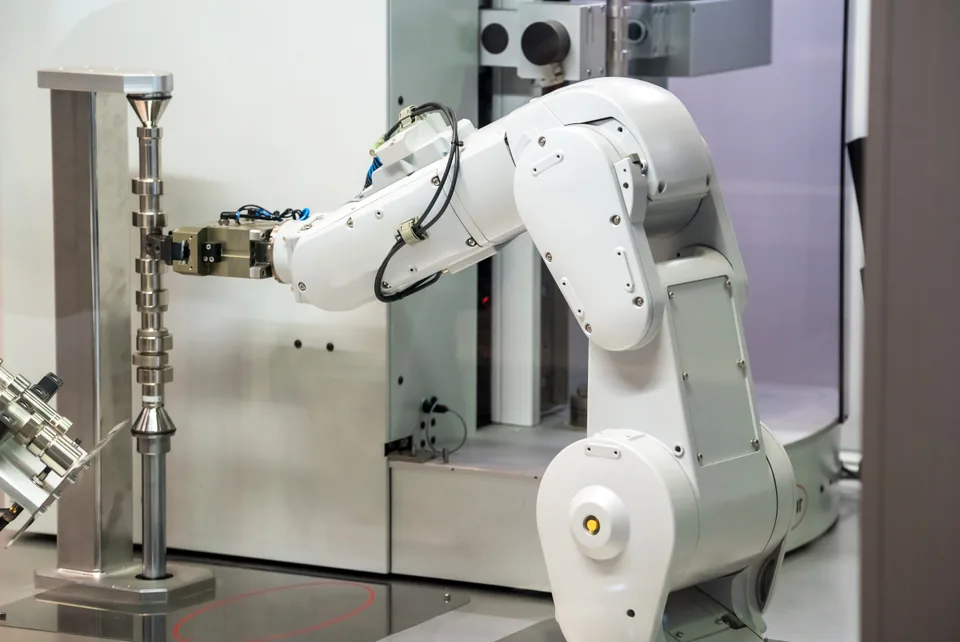
I/O, safety releases, bus communication, handshakes and process sequences are tested step by step to create reproducible machine states.
Existing functions are captured, dependencies documented and migrated in a controlled way to new control or robot generations.
Commissioning and retrofit bring controls, robotics and supporting industrial software together directly. We coordinate the disciplines so that states, interfaces and tests remain traceable across the complete plant.
Develop or migrate control programs, structure operating modes and sequences, and coordinate fieldbuses, interlocks, diagnostics and restart behaviour.
Learn more →Integrate robots, configure programs and tools, optimise paths and handovers, and reliably test communication with PLCs and peripherals.
Learn more →Python and C++ tools, data processing, protocol conversion and interfaces for diagnostics, commissioning, machine connectivity and IT integration.
Learn more →During production ramp-up, software, electrical systems, mechanics, communication and the real process come together fully for the first time. We therefore start from a secured baseline and test the plant from individual signals through operating modes and interfaces to the integrated automatic sequence.
Retrofit work also requires a structured inventory: existing functions, process knowledge and dependencies must be retained while controls, robots, bus components or operator interfaces are renewed. Each stage is prepared so faults can be isolated, changes traced and defined intermediate versions restored if required.
Before the first change, actual machine states, software and hardware versions, interfaces, safety boundaries and known dependencies are recorded. Combined with the required target state, this creates a reliable working and rollback baseline instead of an unsecured assumption.
Operating modes, commands, feedback, interlocks, timeouts and fault reactions are structured clearly across system boundaries. This reduces ambiguity, accelerates troubleshooting and makes later maintenance or expansion easier.
We do not test only the ideal sequence. Manual mode, automatic operation, production interruption, component faults, communication loss and restart behaviour are checked within the agreed scope; changes and results are recorded for a traceable handover.
Commissioning starts with secured software and hardware versions, an agreed test sequence and explicit safety boundaries. Power, I/O, safety permissions and communications are validated first; manual functions, individual automatic steps and the integrated cycle follow. If a deviation occurs, this sequence makes the affected system and test stage clear.
A retrofit must preserve existing functions, production knowledge and often historically grown interfaces while introducing new technology. Dependencies, special cases and current software versions are therefore captured before migration. Conversion proceeds in controlled stages with backups, rollback options and targeted comparisons between old and new behaviour.
Depending on the task and risk assessment, some analysis or preparation may be possible during production. Changes to control programs, safety functions or integrated sequences require coordinated windows, secured backups and a clear rollback plan. The exact scope is agreed with production, maintenance and the responsible project contacts.
Documentation should cover the baseline and handover versions, changed functions and parameters, affected interfaces, test results and known open issues. Depending on the project, it also includes program and parameter backups, version records, network or device changes and restart notes. This keeps clear what was changed, tested and released for operation.