
01
Robot programming
Path planning, CAD/3D-based offline programming, collision checks and optimisation of motions, tool poses, handovers and process points.
Learn more →We examine real machine cycles across PLCs, robots, peripherals and the process itself. Using sequence data, program logic and observations at the machine, we remove unnecessary waits, improve handovers and shorten cycle times without compromising diagnostics, process stability or reliable restart behaviour.
We assess the interaction between controls, robots, tooling, sensors, drives, vision systems and material flow rather than optimising one isolated code block. Robots can be programmed and simulated offline from existing CAD/3D plant models. Reachability, collisions, tool poses, paths and handovers can therefore be prepared before final tuning at the physical machine.
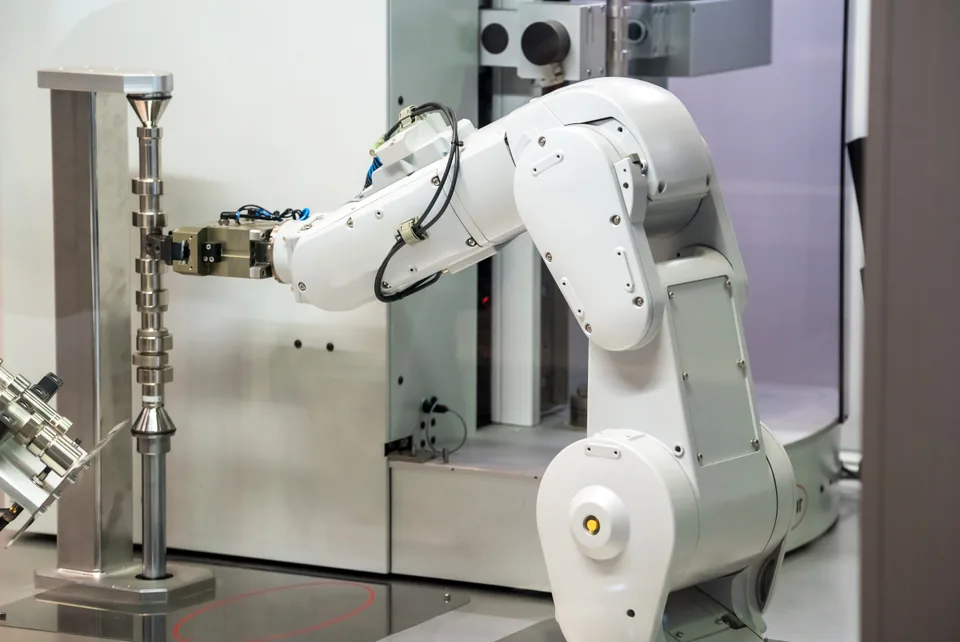
Total cycle time is made up of many dependent steps: robot paths, PLC permissions, sensor response, tool changes, vision checks, process time, material supply and the handover to the next station. A fast local motion adds little if the sequence then waits for a missing permission or another process.
We therefore examine the complete chain, separate technically required process time from avoidable waiting and identify steps that can safely run in parallel. Measurement points, program states and traceable before/after values show whether a change genuinely saves time.
A shorter cycle is only an improvement when quality, process safety, diagnostics and restart behaviour remain controllable. Margins are therefore not removed blindly: edge cases, component tolerances, communication times and real fault conditions still need to be handled safely.
Changes are structured, versioned and checked in manual mode, automatic mode and defined fault scenarios. The target is not a one-off record cycle but a repeatable production sequence that maintenance and operating teams can understand and restart reliably.
Cycle-time and process optimisation usually spans several engineering disciplines. Robot motion, PLC logic and commissioning are therefore aligned with the real production sequence as one system.
Path planning, CAD/3D-based offline programming, collision checks and optimisation of motions, tool poses, handovers and process points.
Learn more →Analysis and refinement of sequences, permissions, handshakes, timeouts and diagnostics for explicit, efficiently parallelised operation.
Learn more →Controlled implementation at the machine with a secured baseline, coordinated test stages, production support and documented handover.
Learn more →